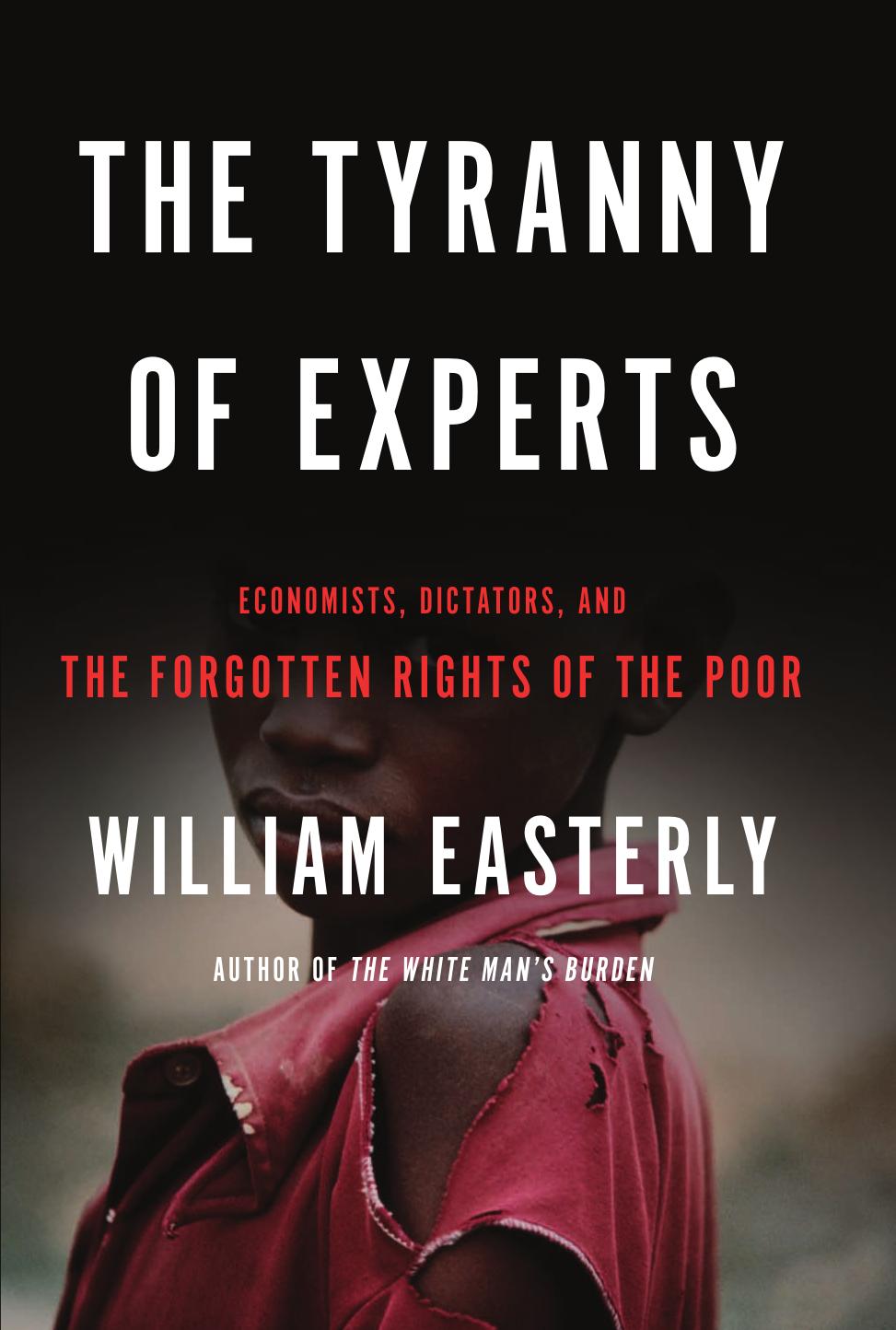
The Tyranny of Experts: Economists, Dictators, and the Forgotten Rights of the Poor by William Easterly
Author:William Easterly
Language: eng
Format: mobi, pdf
ISBN: 9780465080908
Publisher: Basic Books
Published: 2014-03-03T14:00:00+00:00
CHAPTER TEN
HOW MUCH DO NATIONS MATTER?
If there is one number to which the rights of millions will be happily sacrificed, it is the national GDP growth rate. National leaders believe national growth takes place as the result of national actions. These leaders take great pride in rapid national growth, as do their expert advisers who think their advice is paying off. The unofficial line for a “growth miracle” seems to be annual growth of income per capita of 6 percent. Grow 6 percent, and all will be forgiven.
The national state justifies itself partly as the custodian of economic management charged with promoting growth. The development agencies and experts justify themselves as advisors to these states on how to raise growth. Their claims to be able to raise growth are part of the justification for nation-states and their technocratic advisors to have more power. But if their claims are hollow, they provide little justification for the Tyranny of Experts. So this chapter examines how much evidence there is for these claims.
The broader lesson is that the excessive emphasis on development of nations over development of individuals was yet another tragic, misguided choice on the road to forgetting the rights of the poor. Nations do matter for growth and development outcomes, but not as much as usually believed. When they do matter, it is sometimes for the wrong reasons. By overemphasizing the national unit as the place where development happens, the experts wound up interfering with the rights of peoples from different nations to do mutually advantageous deals with each other.
Development’s search for the answer to “what is the right national action to raise growth?” was misplaced. The answer is not the right national action; the answer is a system of political and economic rights in which many political and economic actors will find the right actions—both within and across national borders—to promote their own development.
We have already reviewed the long-run historical narrative in which systems based on rights solve public problems and let individuals solve their own private problems, where systems that oppress and repress individuals fail to do so. In this chapter, we see how development’s extreme focus on the national unit to the exclusion of individual rights yielded little payoff and sometimes yielded a negative payoff.
DO NATIONAL POLICIES AFFECT GROWTH?
My own research career really began in 1991 when Ross Levine (now at the University of California at Berkeley) and I got a grant from our employer at the time, the World Bank, for a research project entitled “How Do National Policies Affect Long-Run Growth?”1 The how in the title of the project took for granted that national policies do affect growth. This captured perfectly the nation-centric mentality of the World Bank at that time (including this author’s mentality at that time) and since.
National policies can of course matter in some extreme situations, as Robert Mugabe demonstrated with a heroic combination of hyperinflation and land expropriation to achieve negative growth in Zimbabwe. But over less-extreme ranges, one of our World
Download
The Tyranny of Experts: Economists, Dictators, and the Forgotten Rights of the Poor by William Easterly.pdf
This site does not store any files on its server. We only index and link to content provided by other sites. Please contact the content providers to delete copyright contents if any and email us, we'll remove relevant links or contents immediately.
International Integration of the Brazilian Economy by Elias C. Grivoyannis(106945)
The Radium Girls by Kate Moore(12007)
Turbulence by E. J. Noyes(8012)
Nudge - Improving Decisions about Health, Wealth, and Happiness by Thaler Sunstein(7684)
The Black Swan by Nassim Nicholas Taleb(7092)
Rich Dad Poor Dad by Robert T. Kiyosaki(6583)
Pioneering Portfolio Management by David F. Swensen(6277)
Man-made Catastrophes and Risk Information Concealment by Dmitry Chernov & Didier Sornette(5987)
Zero to One by Peter Thiel(5773)
Secrecy World by Jake Bernstein(4733)
Millionaire: The Philanderer, Gambler, and Duelist Who Invented Modern Finance by Janet Gleeson(4454)
The Age of Surveillance Capitalism by Shoshana Zuboff(4272)
Skin in the Game by Nassim Nicholas Taleb(4228)
The Money Culture by Michael Lewis(4178)
Bullshit Jobs by David Graeber(4170)
Skin in the Game: Hidden Asymmetries in Daily Life by Nassim Nicholas Taleb(3983)
The Dhandho Investor by Mohnish Pabrai(3746)
The Wisdom of Finance by Mihir Desai(3722)
Blockchain Basics by Daniel Drescher(3570)
